
Bridge Failures: Major Collapses, Causes, and Lessons
Bridge failures occur when a bridge, one of its spans, or a critical structural component can no longer perform as intended. In some cases, the result is a complete collapse. In others, the failure may involve a partial deck loss, a fractured support, severe deformation, or damage serious enough to force closure, demolition, or major reconstruction.
This chronological list focuses on historically significant bridge failures rather than every instance of minor deterioration or localized damage. It includes collapses during construction, failures caused by design or material defects, deterioration, overloading, floods, scour, earthquakes, fires, vehicle impacts, vessel collisions, and other events that compromised structural safety. Priority is given to incidents that caused deaths or injuries, disrupted major transportation routes, exposed weaknesses in engineering or inspection practices, or led to meaningful changes in bridge design, maintenance, regulation, or emergency response.
The cases are organized by historical period, beginning before 1800 and continuing through the present day. Each section highlights notable failures in the United States and around the world, with key details such as location, date, cause, casualties, and safety impact. Later sections compare the deadliest U.S. incidents, explain the most common causes of bridge collapse, and show how past disasters reshaped modern bridge safety.
Bridge Failures Before 1800
Before the Industrial Revolution, bridges were built largely from timber, stone, and simple masonry systems whose performance depended heavily on local craftsmanship and experience. Formal structural analysis, standardized materials, and systematic inspection did not yet exist. As a result, early bridge failures were often triggered by floods, fire, severe weather, military movement, or crowds that exceeded what a structure could safely carry. Surviving records are incomplete, so this list emphasizes well-documented failures that illustrate the principal risks of preindustrial bridge construction rather than attempting a comprehensive catalog.

| Date | Bridge and Location | Primary Cause | Deaths and Significance |
|---|---|---|---|
| October 28, 312 | Milvian Bridge temporary crossing Rome, Roman Empire Wooden pontoon bridge used during the Battle of the Milvian Bridge | The temporary crossing failed as Maxentius’s retreating troops attempted to cross the Tiber | Casualties are unknown; the crossing became unusable |
| October 17, 1091 | London Bridge London, England Wooden bridge across the Thames | A powerful tornado struck London and destroyed or severely damaged the bridge | Casualties are unknown; the bridge required reconstruction |
| 1136 | London Bridge London, England Rebuilt timber crossing | Fire destroyed the wooden bridge, demonstrating the vulnerability of early urban crossings to flames spreading through densely built areas | Casualties are not reliably documented; the bridge was rebuilt |
| 1275 | Sint Servaasbrug Maastricht, Holy Roman Empire Wooden bridge carrying a large religious procession | The structure collapsed under the concentrated weight of the crowd | Historical accounts report about 400 deaths; the bridge became unusable |
| February 2, 1342 | Judith Bridge Prague, Kingdom of Bohemia Medieval stone arch bridge | A severe flood damaged or destroyed much of the structure | Casualties are unknown; roughly two-thirds of the bridge collapsed or was heavily damaged |
| 1444 | Rialto Bridge Venice, Venetian Republic Wooden bridge with a central drawbridge | Spectators crowded the bridge to watch a wedding procession, overloading the structure | The bridge collapsed; the number of casualties is uncertain |
| October 25, 1499 | Pont Notre-Dame Paris, France Wooden bridge lined with houses and shops | The bridge collapsed during flooding after carrying substantial building loads and suffering deterioration | The bridge and its structures were lost; casualty figures are uncertain |
These events show why early bridge safety depended as much on controlling crowds, fire, and river conditions as on the bridge itself. Timber crossings could be rebuilt quickly but were highly vulnerable to weather and flames, while stone bridges offered greater durability yet remained exposed to floods and foundation damage. Because many accounts were recorded long after the events, casualty totals and exact failure mechanisms should be treated as historical estimates rather than modern investigative findings.
Bridge Failures from 1800 to 1899
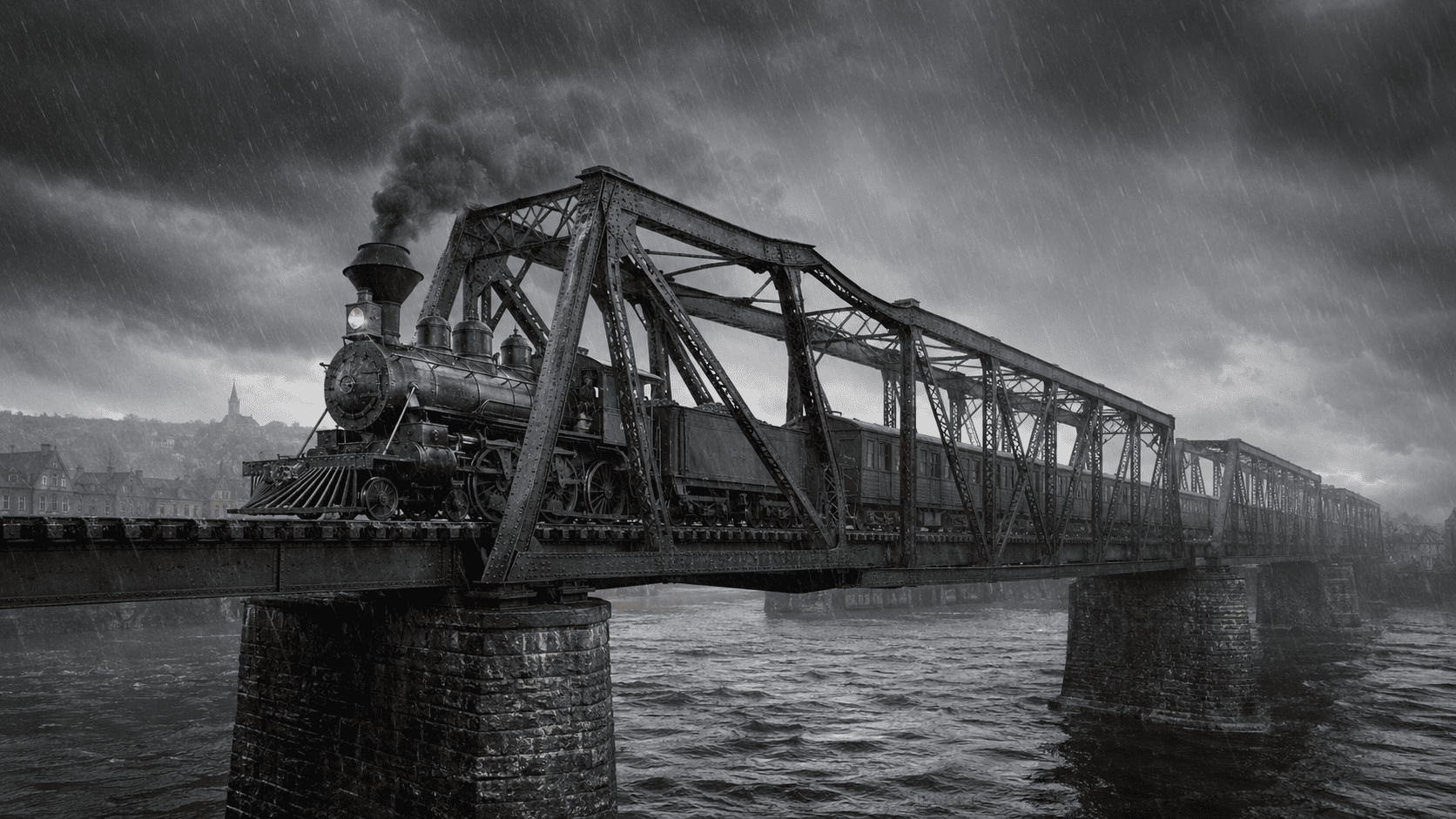
The 19th century transformed bridge construction. Railroads demanded longer spans and heavier load capacity, while builders adopted cast iron, wrought iron, suspension systems, and increasingly ambitious truss designs. These advances expanded transportation networks but also exposed weaknesses in material quality, structural analysis, construction control, and maintenance. Several disasters occurred when new bridge types were placed in service before engineers fully understood their behavior under moving trains, wind, vibration, flooding, or concentrated crowds.
| Date | Bridge and Location | Primary Cause | Deaths and Significance |
|---|---|---|---|
| September 20, 1807 | Eitai Bridge, Edo—present-day Tokyo, Japan Wooden beam bridge over the Sumida River | Festival crowds overloaded the bridge, causing a pier and two spans to fail | Historical estimates range from 500 to 2,000 deaths, making it one of the century’s deadliest bridge failures |
| March 29, 1809 | Ponte das Barcas, Porto, Portugal Wooden pontoon bridge across the Douro River | Thousands of civilians and soldiers crowded onto the bridge while fleeing French forces during the First Battle of Porto | Several spans failed; deaths are often estimated at approximately 4,000 |
| December 6, 1825 | Saale Bridge, Nienburg, Germany Chain-supported bridge with a small movable section | Poor materials, uneven loading, and vibration from a large gathering contributed to failure | Fifty-five people reportedly drowned or died from exposure |
| April 12, 1831 | Broughton Suspension Bridge, England Suspension bridge used by pedestrians and troops | A bolt failed while soldiers marched in step, producing synchronized loading and vibration | One end collapsed and 20 people were injured; British troops were later instructed to break step on bridges |
| May 2, 1845 | Yarmouth Suspension Bridge, England Pedestrian suspension bridge | Spectators shifted toward one side while watching a river performance, overloading the suspension system | Seventy-nine people drowned, many of them children |
| May 24, 1847 | Dee Bridge, Chester, England Cast-iron railroad bridge | A passenger train loaded a structure weakened by a flawed design and brittle cast-iron components | Five people were killed; the failure intensified concern about cast iron in railroad bridges |
| April 16, 1850 | Angers Bridge, France Suspension bridge carrying French troops | Strong wind, corrosion, and the dynamic movement of soldiers contributed to the collapse | Approximately 226 people were killed |
| May 17, 1854 | Wheeling Suspension Bridge, Virginia—now West Virginia Long-span suspension bridge carrying the National Road | Wind produced severe vertical and torsional movement in the deck | The deck was destroyed, but the towers remained standing and no deaths were reported |
| November 1, 1855 | Gasconade Bridge, Missouri Temporary wooden railroad trestle | An inaugural train entered the unfinished crossing before permanent supports had replaced temporary work | Thirty-one people were killed and many others injured |
| March 12, 1857 | Desjardins Canal Bridge, Canada Railroad bridge near Hamilton, Ontario | A locomotive axle failure derailed the train as it approached or crossed the bridge, damaging the structure | Fifty-nine people were killed |
| June 27, 1859 | Springbrook Bridge, Indiana Railroad embankment and bridge | Heavy rain washed out supporting earth and undermined the crossing before a passenger train arrived | At least 41 people were killed; some historical accounts give higher totals |
| September 26, 1860 | Bull Bridge, Ambergate, England Cast-iron railroad bridge | A cast-iron beam cracked and failed beneath a freight train | The bridge collapsed completely, but no deaths or injuries were reported |
| June 11, 1861 | Wootton Bridge, England Cast-iron railroad bridge | Cracked girders, flawed design, and an inadequate repair led to failure under a passing train | Two people were killed |
| February 6, 1871 | New Hamburg Railroad Bridge, New York Wooden trestle and drawbridge | A derailed train collision caused an explosion and fire that destroyed part of the bridge | Twenty-two people were killed |
| May 4, 1873 | Dixon Bridge, Illinois Iron road bridge crowded with pedestrians | A large crowd gathered on one side to watch a baptism, exposing a serious design weakness | Forty-six people were killed and 56 injured |
| May 5, 1875 | Portage Bridge, New York Large wooden railroad bridge over the Genesee River | Fire spread through the timber structure | The bridge was destroyed, but no casualties were reported |
| December 29, 1876 | Ashtabula River Railroad Bridge, Ohio Wrought-iron truss with cast-iron components | Deficient design, fabrication, inspection, and possible fatigue contributed to collapse beneath a passenger train | Ninety-two people were killed and 64 injured; fire in the wreckage increased the losses |
| December 28, 1879 | Tay Rail Bridge, Scotland Wrought-iron girder railroad bridge on cast-iron columns | Defective design and construction, deterioration, inadequate wind resistance, and a severe storm combined during a train crossing | About 75 people were killed; the disaster changed expectations for wind loading and independent review |
| March 14, 1887 | Bussey Bridge, Boston, Massachusetts Iron railroad bridge | Poor design, weak details, and inadequate maintenance caused the bridge to fail beneath a commuter train | Twenty-three people were killed and more than 100 injured |
| June 14, 1891 | Münchenstein Rail Bridge, Switzerland Wrought-iron truss bridge | Structural weaknesses and earlier flood damage contributed to collapse beneath a heavily loaded passenger train | Seventy-one people were killed and 171 injured |
| May 26, 1896 | Point Ellice Bridge, Victoria, British Columbia Iron road bridge carrying a streetcar | An overloaded streetcar entered a deteriorated span whose condition and capacity had not been adequately controlled | At least 47 people were killed; historical totals vary |
Bridge Failures from 1900 to 1949
The first half of the 20th century brought wider use of structural steel, reinforced concrete, motor vehicles, and increasingly ambitious railroad and highway spans. Yet design calculations, material testing, construction oversight, and aerodynamic analysis were still developing. The failures below show how floods, weakened or overloaded structures, construction mistakes, vehicle and vessel impacts, and unfamiliar behavior in long-span bridges continued to cause major losses.
| Date | Bridge and Location | Primary Cause | Deaths and Significance |
|---|---|---|---|
| August 7, 1904 | Dry Creek Bridge, near Eden, Colorado | A flash flood washed out the wooden railroad bridge before a passenger train reached the crossing | The train plunged into floodwater; 111 people were reported killed and the bridge was destroyed |
| January 20, 1905 | Egyptian Bridge, St. Petersburg, Russian Empire | The suspension bridge failed while a cavalry unit and civilian traffic were crossing; the precise mechanism remains disputed | No deaths were reported; the structure was later rebuilt |
| April 15, 1905 | Portage Canal Swing Bridge, Houghton, Michigan | The steamer Northern Wave struck the movable steel span | The swing span was severely damaged and rebuilt; no deaths were reported |
| September 18, 1906 | Cimarron River railroad bridge, Dover, Oklahoma Territory | High water and accumulated debris swept away a temporary wooden trestle | A passenger train entered the gap; reported deaths range widely, from four to more than 100 |
| August 29, 1907 | Quebec Bridge, Quebec City, Canada | Design and management failures allowed critical compression members to buckle while the steel cantilever bridge was under construction | Seventy-five workers were killed; the disaster prompted major changes in design review and project control |
| November 22, 1911 | Romanov Bridge, near present-day Zelenodolsk, Russia | Moving ice undermined construction scaffolding over the Volga River | Thirteen deaths were confirmed and many workers were reported missing |
| June 18, 1914 | Baddengorm Burn railway bridge, Carrbridge, Scotland | Heavy rain and debris from an upstream washout overwhelmed the crossing | Five people drowned when a railcar fell into the burn |
| December 18, 1915 | Division Street Bridge, Spokane, Washington | Poor-quality steel, fatigue, and earlier flood-related impact damage weakened the bridge | The bridge and two streetcars were lost; five to seven people were killed |
| September 11, 1916 | Quebec Bridge, Quebec City, Canada | A jack-bearing failure caused the new center span to slip while it was being lifted into position | Eleven workers were killed; the 5,000-ton span fell into the St. Lawrence River |
| August 2, 1920 | Grand Avenue Bridge, Neillsville, Wisconsin | Repeated heavy truck traffic was believed to have weakened the steel truss | One person was killed and the bridge was replaced with a concrete structure |
| June 18, 1921 | Greenfield Bridge, Pittsburgh, Pennsylvania | A deteriorated wooden bridge collapsed after it had already been closed to vehicles because of structural weakness | No deaths were reported; the crossing was completely lost |
| July 22, 1926 | Fremantle Railway Bridge, Western Australia | Flooding damaged the railway crossing over the Swan River | No casualties were reported; damaged portions required repair and load testing |
| November 22, 1927 | Bridge near Jalón, Spain | The structure failed while carrying a funeral procession | About 100 people were thrown into the water; casualty totals are uncertain |
| December 14, 1928 | Kärevere Bridge, Estonia | Inadequate cement content and design defects caused a newly accepted reinforced-concrete bridge to fail before opening | No one was killed; the bridge was completely destroyed |
| September 1, 1936 | Falling Creek Bridge, Chesterfield County, Virginia | A truck struck a tie rod, triggering the collapse of the wood-and-steel bridge | Four people were killed and five injured |
| January 27, 1938 | Honeymoon Bridge, Niagara Falls, United States–Canada | An ice jam and river pressure displaced the steel arch bridge from its foundations | The bridge was destroyed without reported fatalities and was later replaced by the Rainbow Bridge |
| August 31, 1939 | Sandö Bridge, Sweden | The main concrete arch span collapsed during construction | Eighteen workers were killed; the rebuilt bridge opened in 1943 |
| November 7, 1940 | Tacoma Narrows Bridge, Washington | A narrow, flexible deck proved highly vulnerable to aerodynamic forces, leading to destructive torsional motion in strong wind | The center span collapsed four months after opening. No people died, but the failure transformed suspension-bridge design and established wind-tunnel testing as a central tool for long-span bridges |
| December 12, 1940 | Theodor Heuss Bridge, Ludwigshafen, Germany | The concrete road bridge collapsed during construction | The structure was destroyed and completion of the Rhine crossing was delayed |
| July 28, 1942 | Chesapeake City Bridge, Maryland | The tanker Franz Klasen struck the supports of the vertical-lift span | The central span collapsed and was later replaced by a high-level bridge |
| February 28, 1945 | Deutz Suspension Bridge, Cologne, Germany | The damaged road bridge collapsed while repairs were underway | The bridge was completely destroyed; the number of casualties is uncertain |
| March 17, 1945 | Ludendorff Bridge, Remagen, Germany | Earlier battle damage and demolition attempts left the railroad truss critically weakened | The bridge collapsed ten days after its capture, killing 28 people and injuring 93 |
| February 24, 1946 | John P. Grace Memorial Bridge, Charleston, South Carolina | The freighter Nicaragua Victory struck the steel cantilever bridge | Three spans collapsed, five people were killed, and the damaged sections were replaced |
The chronology and historical casualty figures are based on documented bridge-failure records, although totals for several early incidents vary among sources.
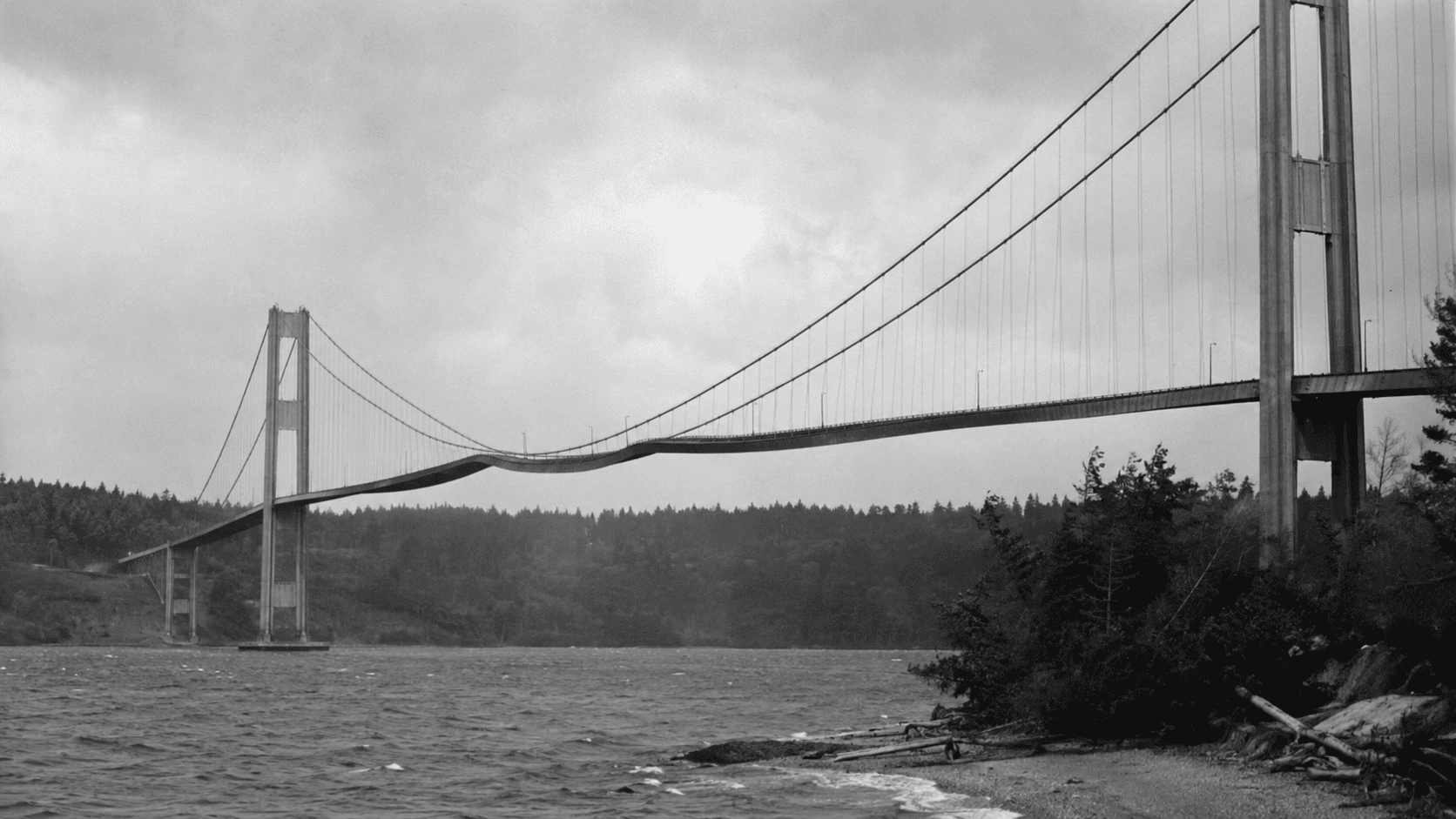
Tacoma Narrows was especially influential because the bridge did not fail from excessive traffic, corrosion, or a conventional overload. Its slender, solid-girder deck interacted unfavorably with the wind, producing aeroelastic instability—motion sustained and amplified by aerodynamic forces. Investigations showed that long suspension bridges required greater torsional stiffness and deck shapes that allowed air to move around or through the structure. The collapse led to expanded wind-tunnel research and changed the design of later suspension bridges.
Across the period as a whole, the recurring lesson was that new materials alone did not guarantee safety. Reliable bridges also required accurate load assumptions, verified material quality, careful construction, protection against impacts and floods, and design methods suited to forces engineers had not previously measured well.
Bridge Failures from 1950 to 1999
Between 1950 and 1999, bridge construction expanded alongside interstate highways, urban expressways, high-speed rail, and global shipping. Steel and reinforced or prestressed concrete enabled longer, more efficient spans, but the period also exposed risks that earlier design and inspection practices did not always address. Failures increasingly involved fatigue, corrosion, construction falsework, vessel impacts, seismic forces, scour, and details with little structural redundancy.
| Date | Bridge and Location | Primary Cause | Deaths and Significance |
|---|---|---|---|
| December 24, 1953 | Tangiwai railway bridge Near Tangiwai, New Zealand | A volcanic lahar from Mount Ruapehu damaged a pier shortly before an overnight passenger train arrived | The locomotive and several cars entered the Whangaehu River, killing 151 people. The disaster demonstrated the need for effective hazard monitoring and railway warning systems. |
| June 17, 1958 | Second Narrows Bridge Vancouver, British Columbia | Temporary support work was unable to carry the load during construction of the steel cantilever bridge | Nineteen people died, including a rescue diver. The inquiry identified errors in falsework calculations and inadequate checking of temporary works. |
| October 25, 1960 | Severn Railway Bridge Gloucestershire, England | Two fuel barges collided in fog and struck a bridge pier | Two spans collapsed, five crew members died, and the damaged railway crossing was ultimately abandoned. |
| July 10, 1962 | Kings Bridge Melbourne, Australia | Brittle fracture developed in welded steel girders because of unsuitable steel and fabrication-related weaknesses | No one died, but major cracking forced repairs and a Royal Commission review of steel selection, welding, and quality control. |
| June 16, 1964 | Lake Pontchartrain Causeway Louisiana | A towboat pushing barges struck the bridge during poor visibility | A section fell into the lake and six motorists were killed, illustrating the vulnerability of low-level crossings to vessel impacts. |
| August 10, 1966 | Heron Road Bridge Ottawa, Ontario | Falsework supporting fresh concrete failed during construction | Nine workers were killed and more than 50 injured. The collapse became a major Canadian case involving temporary works, construction sequencing, and site oversight. |
| December 15, 1967 | Silver Bridge Point Pleasant, West Virginia–Kanauga, Ohio | A small fatigue crack in a single eyebar grew until the fracture triggered a rapid chain collapse in the nonredundant suspension system | Forty-six people died. The investigation intensified nationwide concern about aging bridges and helped drive stronger federal inspection requirements. |
| November 6, 1967 | Queen Juliana Bridge Willemstad, Curaçao | A large portion of the steel bridge collapsed while it was being erected | Fifteen workers died. Construction was later restarted, and a redesigned bridge opened in 1974. |
| June 2, 1970 | Cleddau Bridge Pembrokeshire, Wales | A steel box-girder cantilever failed during erection because of an inadequate support diaphragm and serious organizational shortcomings | Four workers died and five were injured. The disaster contributed to an international reassessment of box-girder design and erection procedures. |
| October 15, 1970 | West Gate Bridge Melbourne, Australia | Attempts to correct a difference in camber between box-girder sections introduced severe stresses before a span failed | A 367-foot section collapsed during construction, killing 35 workers and injuring 18. The Royal Commission prompted stricter design and erection controls. |
| November 10, 1971 | South Bridge Koblenz, West Germany | A steel box-girder section buckled and fell into the Rhine during construction | Thirteen workers were killed, adding to concerns about the design and erection of large steel box-girder bridges. |
| November 7, 1972 | Sidney Lanier Bridge Brunswick, Georgia | The freighter African Neptune struck the bridge, causing part of the roadway to collapse | Ten people were killed. The replacement bridge was designed with greater clearance and protection for marine traffic. |
| January 5, 1975 | Tasman Bridge Hobart, Tasmania | The bulk carrier Lake Illawarra struck bridge piers in the Derwent River | Two spans and part of the roadway collapsed. Twelve people died, including motorists and ship crew members, and eastern Hobart lost its main road connection. |
| August 1, 1976 | Reichsbrücke Vienna, Austria | Long-term deterioration and failure around a pier and bearing system caused a major span to collapse | One motorist died. The Danube crossing was replaced rather than repaired. |
| February 13, 1979 | Hood Canal Floating Bridge Washington | A severe storm subjected the floating bridge to waves and pontoon flooding | The western half sank without fatalities. The replacement incorporated revised design and operating provisions for severe weather. |
| January 18, 1980 | Almö Bridge Near Tjörn, Sweden | The bulk carrier Star Clipper struck the bridge’s main arch in darkness | The central span collapsed and eight motorists drove into the gap before traffic could be stopped. |
| May 9, 1980 | Sunshine Skyway Bridge Tampa Bay, Florida | The bulk carrier Summit Venture struck a support pier during a sudden storm with restricted visibility | About 1,297 feet of bridge fell into the bay and 35 people died. The replacement included protective dolphins and improved vessel-collision safeguards. |
| July 17, 1981 | Hyatt Regency walkways Kansas City, Missouri | A connection redesign doubled the load on critical hanger-rod box-beam connections, which lacked adequate capacity | Two suspended interior walkways—not a highway or railroad bridge—collapsed, killing 114 people and injuring more than 200. The case became a defining lesson in design review and engineering responsibility. |
| April 15, 1982 | Cline Avenue bridge ramp East Chicago, Indiana | Falsework and its supporting concrete pads failed during a concrete placement operation | Fourteen construction workers ultimately died and others were injured. Investigators identified deficient temporary-work design, components, and documentation. |
| June 28, 1983 | Mianus River Bridge Greenwich, Connecticut | Corrosion and an undetected displacement in a pin-and-hanger assembly allowed a suspended span to lose support | A 100-foot section of Interstate 95 fell into the river, killing three people and seriously injuring three. |
| April 5, 1987 | Schoharie Creek Bridge Near Amsterdam, New York | Floodwater and scour—erosion of soil around a foundation—undermined a pier | Multiple New York State Thruway spans collapsed and 10 people died. The investigation emphasized underwater inspection and evaluation of scour vulnerability. |
| April 1, 1989 | Hatchie River Bridge Near Covington, Tennessee | Deteriorated piles and river conditions contributed to the collapse of supporting column bents | Three spans fell, sending five vehicles into the river and killing eight people. The case reinforced concerns about underwater components and inspection follow-through. |
| October 17, 1989 | Cypress Street Viaduct Oakland, California | The Loma Prieta earthquake overwhelmed vulnerable reinforced-concrete columns and connections in the double-deck freeway | About 0.7 mile collapsed, killing 42 people. The failure accelerated seismic evaluation and retrofit programs for California bridges. |
| October 17, 1989 | San Francisco–Oakland Bay Bridge California | The Loma Prieta earthquake caused a 50-foot upper-deck section to fall onto the lower deck | One motorist died. The crossing closed for approximately one month while the damaged section was repaired. |
| November 25, 1990 | Lacey V. Murrow Memorial Bridge Seattle, Washington | During renovation, wastewater and stormwater entered the hollow concrete pontoons, causing progressive flooding | Much of the floating bridge sank, although no one was killed. The failure exposed serious weaknesses in construction planning, risk control, and project oversight. |
| September 22, 1993 | Big Bayou Canot railroad bridge Near Mobile, Alabama | Barges pushed by the towboat Mauvilla struck and displaced the movable bridge in dense fog; an Amtrak train arrived minutes later | The train derailed, killing 47 people and injuring 103. The accident revealed failures in navigation, bridge protection, communication, and emergency response. |
| October 21, 1994 | Seongsu Bridge Seoul, South Korea | Poor welding, fatigue cracking, corrosion, and inadequate inspection weakened a critical steel connection | A 157-foot span fell into the Han River during morning traffic, killing 32 people and injuring 17. |
| March 10, 1995 | Interstate 5 bridges over Arroyo Pasajero California | Flooding produced severe scour around bridge foundations | Two bridges failed and seven people died. The event reinforced federal efforts to identify and manage scour-critical bridges. |
| September 27, 1996 | Koror–Babeldaob Bridge Palau | The prestressed-concrete box-girder bridge collapsed after years of excessive deflection and shortly after strengthening work | Two people died, and the loss of the crossing disrupted water, power, and transportation services between the islands. |
| June 3, 1998 | Road overpass at Eschede Lower Saxony, Germany | A high-speed train derailed after a wheel failure, struck the overpass supports, and brought the bridge down onto following cars | The overall rail disaster killed 101 people. Here, bridge collapse was a consequence of the derailment rather than the initiating structural failure. |
| July 6, 1998 | Injaka Bridge Mpumalanga, South Africa | The concrete bridge collapsed during incremental launching after temporary construction and design-related failures | Fourteen people died and 19 were injured, many of them workers standing on the unfinished deck. |
| January 4, 1999 | Qijiang Rainbow Bridge Chongqing, China | Defective construction, poor welding, inadequate materials, and corruption-related oversight failures weakened the pedestrian bridge | The structure collapsed into the river, killing 40 people and injuring others. |
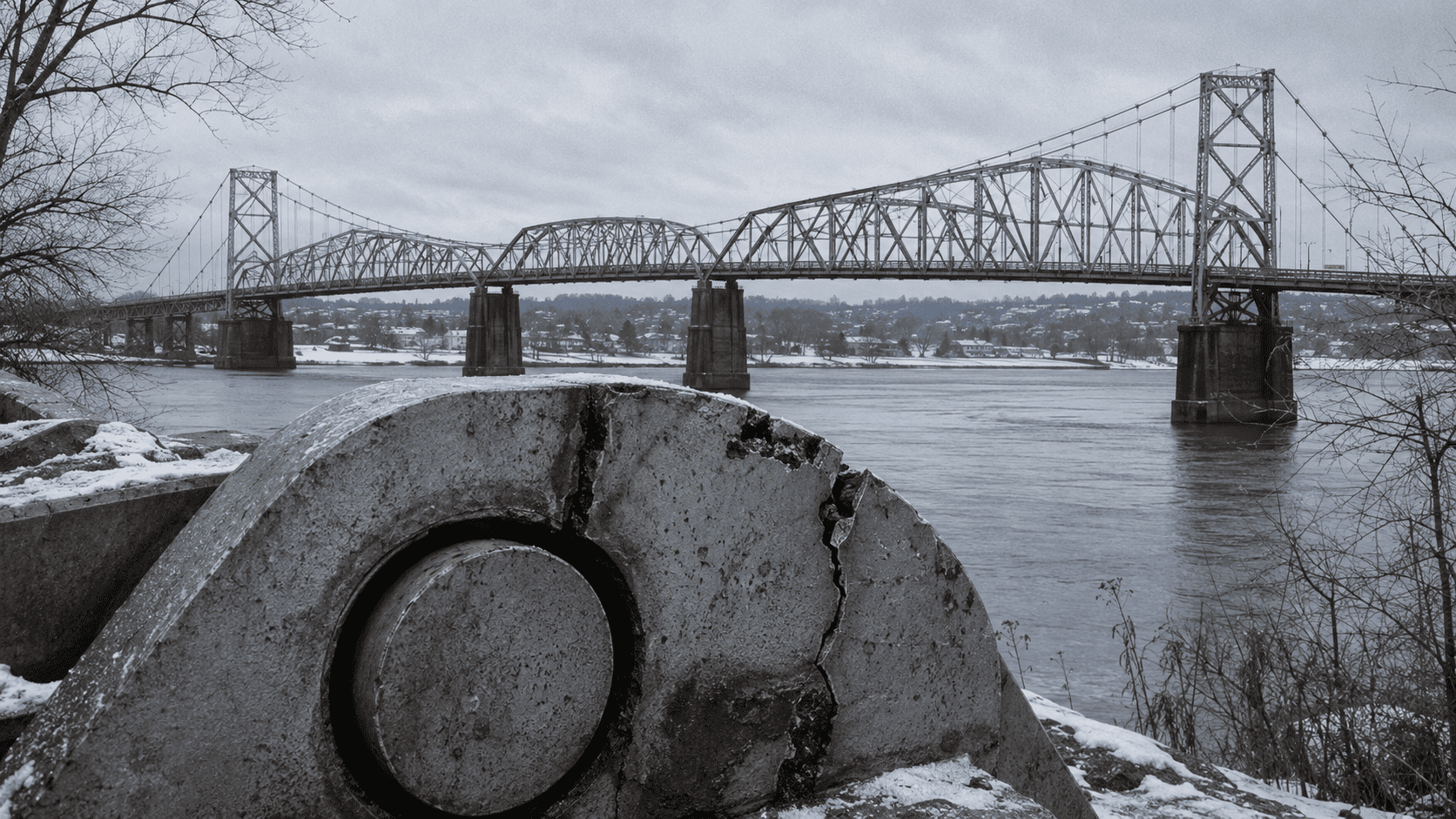
This period marked a shift from isolated structural lessons to organized bridge-safety programs. U.S. investigations increasingly focused on fracture-critical details, underwater foundations, seismic vulnerability, construction-stage controls, and the consequences of vessel impacts. The findings helped expand inspection practices and showed that maintenance, temporary works, navigation risks, and emergency response must be treated as integral parts of bridge safety.
Bridge Failures from 2000 to 2020
Bridge failures in the first two decades of the 21st century were documented with more detailed forensic analysis than most earlier disasters. Investigators could examine digital design records, surveillance footage, inspection histories, material samples, vehicle data, and construction sequences. The resulting findings show that collapses rarely stemmed from a single isolated defect. Many involved a triggering event—such as flooding, fire, overload, or impact—combined with inadequate capacity, deterioration, weak temporary works, or failures in inspection and decision-making.
| Date | Bridge and Location | Primary Cause | Deaths and Significance |
|---|---|---|---|
| May 20, 2000 | Charlotte Motor Speedway pedestrian bridge, North Carolina | A concrete beam fractured as spectators left a race; design and reinforcement deficiencies reduced the span’s capacity | The bridge fell onto U.S. Route 29, injuring 107 people. |
| December 13, 2000 | Hoan Bridge, Milwaukee, Wisconsin | Highly concentrated stresses around welded details caused bracing members to fracture and the deck to buckle | No one was killed, but the damaged span was demolished and rebuilt, while similar details elsewhere were reviewed. |
| March 4, 2001 | Hintze Ribeiro Bridge, Portugal | Flooding and long-term riverbed erosion undermined a pier foundation, with sand extraction contributing to scour | The central span collapsed beneath a bus and cars, killing 59 people. |
| September 15, 2001 | Queen Isabella Causeway, Texas | Barges left the navigation channel and struck a supporting pier | Three sections collapsed and eight motorists died after vehicles entered the opening. Texas later installed a bridge-collapse warning system. |
| May 26, 2002 | I-40 Bridge, near Webbers Falls, Oklahoma | A towboat captain lost consciousness, allowing barges to strike a pier | A 600-foot section collapsed. Fourteen people died because approaching drivers could not detect the missing roadway in time. |
| July 21, 2003 | Kinzua Bridge, Pennsylvania | A tornado subjected the historic steel viaduct to forces beyond its capacity; deteriorated anchor bolts contributed to tower failures | Eleven towers collapsed. No deaths occurred, and the bridge was preserved as a ruin rather than rebuilt. |
| March 26, 2004 | I-95 Howard Avenue overpass, Bridgeport, Connecticut | A tanker crash produced an intense fire that weakened the steel superstructure | Southbound spans collapsed without fatalities; temporary lanes opened within days. |
| September 30, 2006 | De la Concorde overpass, Laval, Quebec | Deficient reinforcement detailing, construction practices, inspection, and concrete behavior contributed to a punching-shear failure | The overpass collapsed onto the highway below, killing five people and injuring six. |
| December 2006 | Bhagalpur pedestrian overbridge, India | A 150-year-old bridge being dismantled collapsed onto a passing passenger train | More than 30 people were killed, demonstrating the risks posed by demolition work conducted beside active transportation routes. |
| June 15, 2007 | Jiujiang Bridge, Guangdong, China | A vessel struck a pier of the highway bridge | Part of the bridge fell into the river, killing eight people. |
| August 1, 2007 | I-35W Mississippi River Bridge, Minneapolis, Minnesota | Undersized gusset plates had inadequate capacity under added bridge weight, traffic, and concentrated construction loads | Thirteen people died and 145 were injured. The investigation prompted nationwide attention to gusset plates and construction loading. |
| August 13, 2007 | Tuo River Bridge, Fenghuang, China | The masonry arch bridge collapsed during construction as workers removed scaffolding; poor materials and deficient project control were identified | Sixty-four workers died and 22 were injured. |
| September 26, 2007 | Cần Thơ Bridge approach, Vietnam | Uneven settlement of a temporary support foundation caused the falsework and partially completed approach spans to fail | Fifty-five workers died and dozens were injured in one of Vietnam’s worst construction disasters. |
| August 8, 2008 | Road bridge at Studénka, Czech Republic | A bridge under reconstruction fell onto an active railroad immediately before a passenger train arrived | The train struck the debris at high speed, killing eight people and injuring about 70. |
| August 21, 2009 | Broadmeadow railway viaduct, Ireland | Tidal scour undermined a masonry pier until a span collapsed | No one was injured because a train had crossed shortly beforehand and the line was subsequently protected. |
| December 25, 2009 | Kota Chambal Bridge, India | Temporary works failed while the cable-stayed bridge was under construction | Forty-eight workers were killed. Investigations highlighted serious deficiencies in construction planning, execution, and oversight. |
| November 26, 2011 | Kutai Kartanegara Bridge, Indonesia | A suspension-system component failed while maintenance work was underway; deterioration and hanger condition were among the concerns | The deck fell into the Mahakam River, killing at least 20 people and injuring dozens. |
| August 24, 2012 | Yangmingtan Bridge ramp, Harbin, China | Several heavily loaded trucks occupied the same ramp section; overloading and construction quality were investigated | A 100-meter section overturned, killing three people and injuring five. |
| May 23, 2013 | I-5 Skagit River Bridge, Washington | An oversized load struck overhead truss members, compromising a nonredundant span | One span collapsed and vehicles fell into the river. Three people were injured, but no one died. |
| April 12, 2014 | Acaraguá Bridge, Misiones, Argentina | A deteriorated highway bridge failed while carrying a passenger bus | Three people were killed and 30 injured. |
| June 10, 2014 | Cable Bridge interchange, Surat, India | A curved concrete span failed during removal of construction staging because of a design deficiency | Ten workers were killed and six injured; the design was modified before completion. |
| January 10, 2016 | Nipigon River Bridge, Ontario | A tie-down connection failed under uplift forces, allowing one side of the new cable-stayed bridge deck to rise | No injuries occurred, but closure severed the only continuous highway route across northern Canada until temporary repairs were completed. |
| March 31, 2016 | Vivekananda Road flyover, Kolkata, India | A partially completed steel-and-concrete flyover collapsed during construction amid design, fabrication, and execution failures | Twenty-six people were killed and dozens injured. |
| March 30, 2017 | Interstate 85 overpass, Atlanta, Georgia | Combustible construction materials stored beneath the bridge caught fire, heating the steel until a 92-foot span collapsed | No one was injured, but the failure caused major regional traffic disruption. |
| January 15, 2018 | Chirajara Bridge, Colombia | A design error left a critical crossbeam in one of the bridge’s tall concrete piers with insufficient capacity during construction | The pier and adjoining deck collapsed, killing nine workers. |
| March 15, 2018 | FIU pedestrian bridge, Miami, Florida | Calculation errors left a critical nodal region unable to carry its loads; inadequate peer review and the response to severe cracking also contributed | The unfinished span collapsed over traffic, killing six people and injuring ten. |
| August 14, 2018 | Ponte Morandi, Genoa, Italy | Failure of a load-bearing stay system followed severe internal corrosion and decades of unresolved deterioration and maintenance concerns | A large section of the A10 viaduct collapsed, killing 43 people and forcing demolition of the remaining bridge. |
| September 4, 2018 | Majerhat Bridge, Kolkata, India | Long-term deterioration and excessive structural demands were among the conditions investigated after a span failed | Three people died and 25 were injured. |
| October 1, 2019 | Nanfang’ao Bridge, Taiwan | Corrosion, inadequate inspection, and insufficient maintenance weakened critical cable components | The bridge collapsed onto fishing vessels, killing six people and injuring 12. |
| October 10, 2019 | Route 312 overpass, Wuxi, China | An illegally overloaded truck created extreme eccentric loading on the elevated roadway | A large section overturned, killing three people and injuring two. |
| September 15, 2020 | Pensacola Bay Bridge, Florida | An unsecured construction barge driven by Hurricane Sally struck the bridge | A section collapsed into the bay. No deaths were reported, but the crossing remained closed for months. |

Modern investigations made it easier to separate an immediate trigger from the conditions that allowed it to become catastrophic. Digital records, inspection histories, material testing, and reconstruction of construction sequences revealed recurring combinations of design error, weak temporary works, deterioration, overload, impact, fire, flooding, and delayed action. The period also confirmed that unfinished bridges and rehabilitation projects require the same level of engineering review as completed structures.
These investigations also became more precise about uncertainty. Investigators could distinguish a failed component from the organizational decisions that left it vulnerable, compare computer models with physical evidence, and reconstruct the order in which members lost capacity. That broader approach made bridge failure analysis less focused on identifying a single broken part and more focused on understanding the complete system, including design assumptions, construction records, inspections, maintenance decisions, traffic control, and emergency response.
Bridge Failures from 2021 to the Present
Updated through July 9, 2026. Recent cases may remain under investigation, and the causes listed below distinguish confirmed findings from preliminary explanations. This selection emphasizes fatal collapses, major transportation disruptions, official investigations, and failures involving floods, impacts, deterioration, construction, or extreme weather.
| Date | Bridge and Location | Primary Cause | Deaths and Significance |
|---|---|---|---|
| May 3, 2021 | Mexico City Metro Line 12 overpass, Mexico | An elevated steel-concrete section failed beneath a passing train. Technical reviews identified construction deficiencies and broader design and maintenance concerns | Twenty-six people were killed and 103 injured. The collapse led to reconstruction and reinforcement of the elevated line. |
| July 15, 2021 | Georgia Route 86 overpass above I-16, Georgia | A raised dump trailer struck the bridge and shifted the deck approximately 6 feet | No one was injured, but both directions of I-16 closed while the damaged overpass was demolished, creating a major regional detour. |
| January 28, 2022 | Fern Hollow Bridge, Pittsburgh, Pennsylvania | The NTSB found that corrosion and section loss caused a fracture-critical tie plate on one bridge leg to fail after repeated maintenance recommendations were not completed | The bridge fell into Frick Park with several vehicles and a transit bus on it. Four people were injured. |
| August 15, 2022 | Tretten Bridge, Norway | Investigators concluded that block-shear failure most likely began in a glued-laminated timber diagonal and overloaded other truss members | The 10-year-old bridge collapsed across a river and the E6 highway. The two vehicle occupants survived. |
| September 28, 2022 | Sanibel Causeway, Florida | Hurricane Ian’s storm surge washed away roadway approaches and damaged causeway spans | The only road connection to Sanibel Island became impassable, severely affecting emergency response and recovery access. |
| October 30, 2022 | Morbi suspension bridge, Gujarat, India | The pedestrian bridge collapsed four days after reopening following repair work; responsibility for renovation, approval, crowding, and operation became central to the investigation and court proceedings | The disaster killed 135 people, making it one of the deadliest bridge failures of the century. |
| June 11, 2023 | I-95 overpass, Philadelphia, Pennsylvania | A gasoline tanker crashed and burned beneath the highway, weakening the supporting steel until the northbound span collapsed | The truck driver died. Closure of a major East Coast freight and commuter route prompted an accelerated temporary reconstruction. |
| August 14, 2023 | Randklev railway bridge, Norway | Flooding undermined a river pier and removed its foundation support | The bridge collapsed without casualties, interrupting an important rail corridor after extreme rainfall. |
| August 23, 2023 | Railway bridge under construction near Sairang, Mizoram, India | A steel bridge segment and erection equipment failed during construction; the detailed sequence was investigated by authorities | Twenty-six workers were killed. |
| February 22, 2024 | Lixinsha Bridge, Guangzhou, China | An empty container barge struck a bridge pier | Part of the roadway collapsed, killing five people and injuring three. |
| March 26, 2024 | Francis Scott Key Bridge, Baltimore, Maryland | The NTSB determined that a loose electrical connection caused a blackout aboard the containership Dali, resulting in loss of propulsion and steering before impact. The bridge’s vulnerability to vessel collision and the absence of effective worker evacuation warnings contributed to the outcome | The main span collapsed and six highway workers were killed. Port and highway access were severely disrupted. |
| July 19, 2024 | Highway bridge near Shangluo, Shaanxi, China | Flash flooding and debris caused a section of the bridge to fail | At least 38 people were confirmed dead and 24 remained missing in later reporting. |
| September 9, 2024 | Phong Châu Bridge, Phú Thọ Province, Vietnam | Flooding associated with Typhoon Yagi caused part of the truss bridge to collapse into the Red River | Vehicles fell into the river; one death was confirmed and several people remained missing during recovery operations. |
| September 11, 2024 | Carola Bridge, Dresden, Germany | Investigators linked the partial collapse to severe corrosion-related damage and fatigue in prestressing steel | No one was injured, but the loss of a major road and light-rail crossing disrupted traffic throughout central Dresden. |
| December 22, 2024 | Juscelino Kubitschek de Oliveira Bridge, Brazil | The central section of the aging highway bridge failed while vehicles were crossing; the exact initiating cause remained under investigation | Thirteen people were confirmed dead and four remained missing. Hazardous-material trucks in the river complicated recovery. |
| February 27, 2025 | Cabagan–Santa Maria Bridge, Isabela, Philippines | A span failed beneath a heavily loaded truck shortly after the bridge entered regular service. Officials cited design deficiencies and overloading, while the designer disputed aspects of that conclusion | Six people were injured and the new crossing was closed. |
| June 15, 2025 | Kundmala pedestrian bridge, Maharashtra, India | The narrow bridge failed while crowded with visitors and motorcycles; authorities investigated its condition, loading, and maintenance history | Four people were killed and more than 50 injured. |
| July 9, 2025 | Gambhira Bridge, Gujarat, India | A roadway span failed during morning traffic. Maintenance and structural condition were investigated, but a final technical cause had not been established in the initial reporting | Twenty-two people ultimately died, and the disaster triggered inspections of bridges across Gujarat. |
| February 2, 2026 | Bridge under construction in Yancheng, Jiangsu, China | Part of the unfinished bridge collapsed; the cause remained under investigation | At least two workers were confirmed dead and three were reported missing during the rescue operation. |
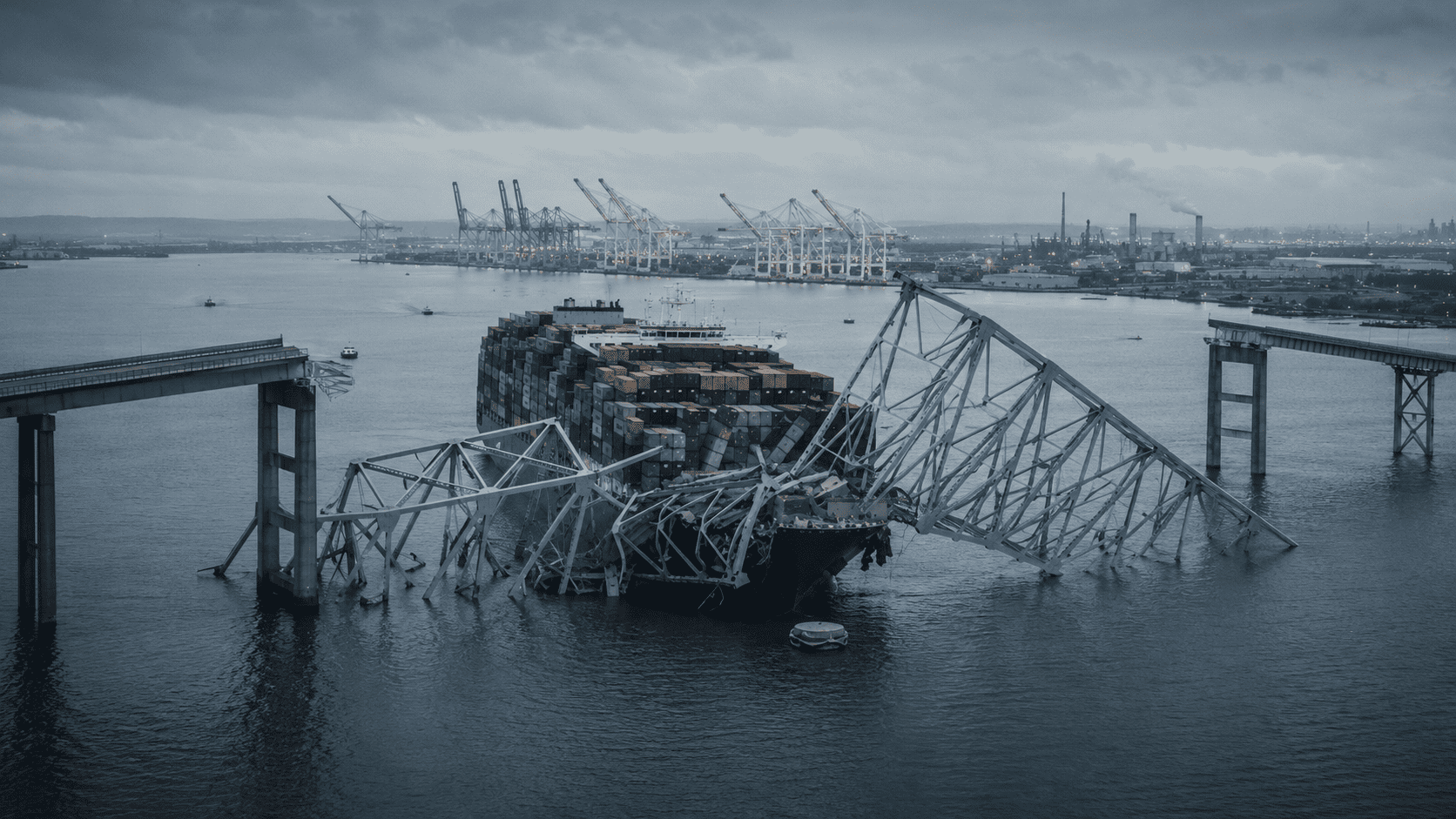
These recent failures continue to show how sudden events interact with long-developing vulnerabilities. Because several investigations remain open or have evolved as new evidence emerged, preliminary explanations should not be treated as final findings.
The consequences also extend beyond the structure itself. Closure of a major bridge can interrupt port access, isolate communities, redirect freight traffic, delay emergency services, and require temporary crossings or accelerated reconstruction. For recent incidents, the scale of that disruption is part of their historical significance even when the number of casualties is comparatively low.
Bridge Disasters in Fiction
Bridge collapses have also played a recurring role in fiction, where they often symbolize war, fate, sacrifice, or the failure of human control. In Thornton Wilder’s novel The Bridge of San Luis Rey, the collapse of a rope bridge in Peru becomes the starting point for an inquiry into destiny and the lives of the victims.
In The Bridge on the River Kwai, the destruction of a railway bridge represents both military strategy and the moral conflict created by wartime duty. Silent-era film The General includes one of cinema’s best-known bridge-collapse scenes, in which a locomotive crosses a burning structure and falls into the river. A similar wartime spectacle appears in The Good, the Bad and the Ugly, where rival characters destroy a bridge to disrupt the fighting around them.
Unlike real bridge failures, these fictional disasters are designed primarily to advance the plot or reinforce a theme rather than document engineering causes.
Deadliest Bridge Failures in U.S. History
Fatality rankings depend on how a “bridge failure” is defined. Some lists include only permanent highway and railroad bridges, while others include construction failures, elevated roadways, interior pedestrian structures, or transportation disasters initiated by a damaged bridge. The table below compares ten widely cited modern U.S. incidents without repeating the full descriptions already provided in the chronology.
| Rank | Bridge or Structure | Year | Deaths | Failure Category |
|---|---|---|---|---|
| 1 | Hyatt Regency walkways Kansas City, Missouri | 1981 | 114 | Connection design failure; suspended interior walkways |
| 2 | Big Bayou Canot railroad bridge Near Mobile, Alabama | 1993 | 47 | Vessel impact and train derailment |
| 3 | Silver Bridge West Virginia–Ohio | 1967 | 46 | Fracture of a nonredundant member |
| 4 | Cypress Street Viaduct Oakland, California | 1989 | 42 | Earthquake |
| 5 | Sunshine Skyway Bridge Tampa Bay, Florida | 1980 | 35 | Vessel impact |
| 6 | I-40 Bridge at Webbers Falls Oklahoma | 2002 | 14 | Vessel impact |
| 7 | Cline Avenue bridge ramp East Chicago, Indiana | 1982 | 14 | Construction falsework failure |
| 8 | I-35W Mississippi River Bridge Minneapolis, Minnesota | 2007 | 13 | Design error and construction loading |
| 9 | Schoharie Creek Bridge Near Amsterdam, New York | 1987 | 10 | Scour and foundation failure |
| 10 | Sidney Lanier Bridge Brunswick, Georgia | 1972 | 10 | Vessel impact |
The Hyatt Regency entry requires an important qualification: the failed structures were suspended walkways inside a hotel atrium, not a highway, railroad, or river bridge. It remains in this comparison because it is commonly included in U.S. bridge-collapse rankings and became a landmark case in connection design and engineering responsibility.
The ranking shows no single dominant mechanism. Design and construction failures account for several events, while external hazards include earthquakes, scour, and four vessel-related disasters. The concentration of marine impacts also shows why fatality totals depend not only on whether a bridge can resist damage, but on whether traffic can be stopped before vehicles reach a missing span.
Fatality totals should also be interpreted in context. A heavily traveled bridge may expose hundreds of people within minutes, while a similar structural failure during a closure may cause no deaths. Time of day, traffic density, the speed of collapse, weather, visibility, access for rescuers, and the presence of buses or trains can all affect the outcome. For that reason, the deadliest incident is not necessarily the one with the greatest engineering influence or the largest economic impact.
Older U.S. disasters can produce different rankings because historical records do not always distinguish between deaths caused by the bridge collapse, a subsequent fire, drowning, or a train derailment. Limiting this comparison to widely documented modern events provides more consistent figures, but it should not be read as a complete ranking of every bridge-related disaster in U.S. history.
Common Causes of Bridge Failures
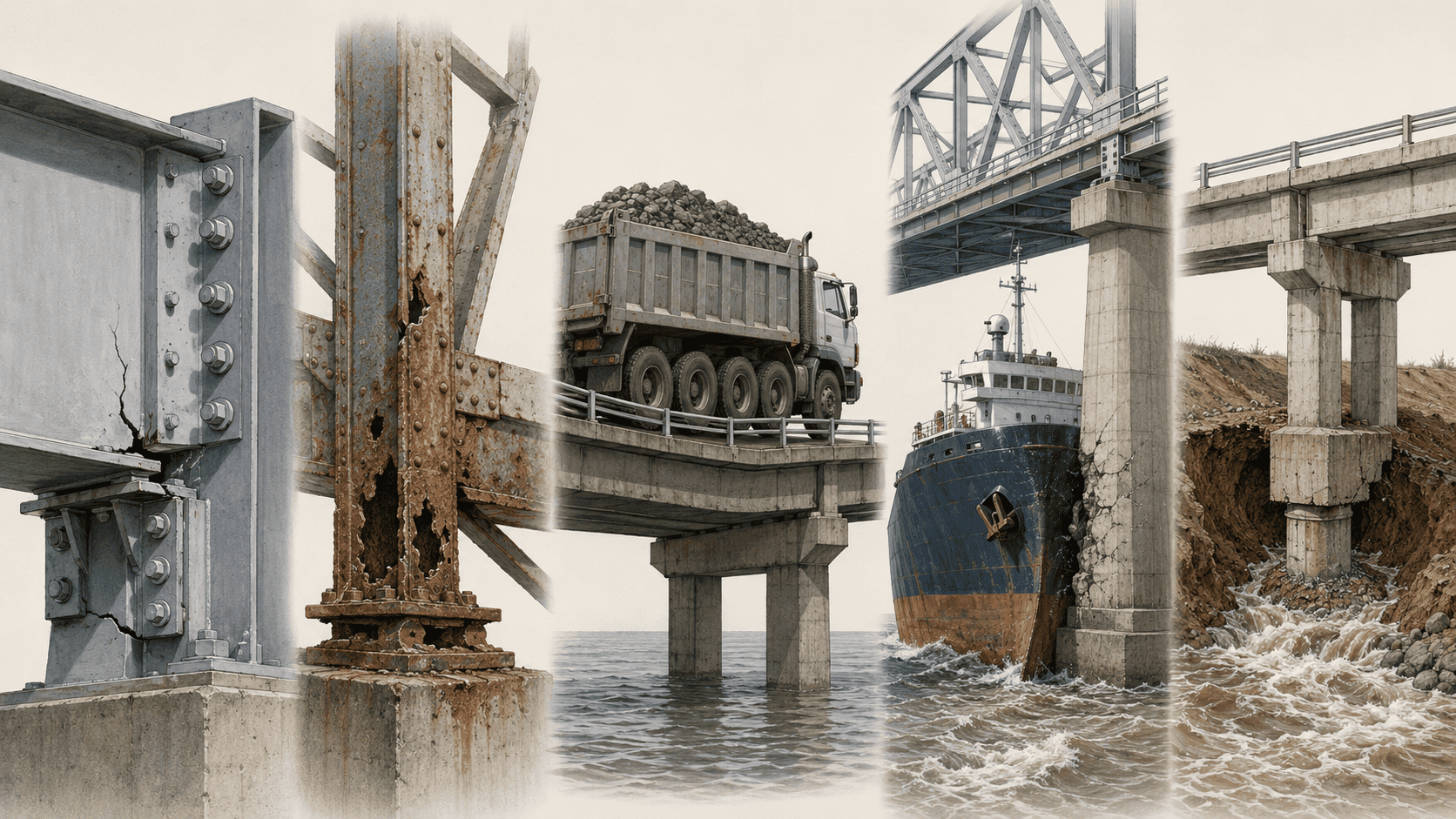
Bridge failures rarely result from one isolated problem. A vulnerable detail may remain in service for years before an unusual load, flood, impact, or construction operation triggers collapse. Investigators therefore distinguish the immediate event from underlying weaknesses in design, materials, construction, deterioration, or site conditions.
Many failures are best understood as a chain. A design detail may concentrate stress, corrosion may reduce the remaining section, an inspection may miss the damage, and an overload or storm may supply the final demand. Breaking any one link can prevent collapse, which is why investigators examine both the physical mechanism and the conditions that allowed it to develop.
Design and Engineering Errors
Design errors occur when calculations, assumptions, details, or load paths do not provide the required capacity. Engineers may underestimate forces, overlook a critical connection, specify an undersized component, or fail to account for loads introduced during construction, rehabilitation, or future use. Complex structural behavior can also be simplified too aggressively, leaving local stresses or instability unrecognized.
A lack of structural redundancy can magnify these errors. Redundancy provides alternate load paths so that forces can be redistributed after one component is damaged. In a nonredundant system, fracture of a single critical member may initiate a rapid progressive collapse.
Construction and Material Defects
A sound design can still fail when construction does not match the plans or materials do not perform as specified. Common problems include weak concrete, brittle or defective steel, poor welding, misplaced reinforcement, inadequate bolts, incorrectly assembled connections, and unauthorized field changes. Each defect can reduce capacity or change how forces move through the structure.
Construction sequence is another major risk. Falsework, formwork, lifting systems, scaffolding, and partially completed spans must carry workers, equipment, and fresh concrete before the permanent load path exists. A bridge that is stable when complete may be vulnerable during erection, launching, demolition, or rehabilitation.
Deterioration, Corrosion, and Inadequate Maintenance
Bridges lose capacity as water, deicing salts, marine exposure, temperature cycles, and repeated traffic loads damage their components. Corrosion removes metal from steel members, a process known as section loss. Fatigue creates and enlarges cracks through repeated stress cycles, even when individual vehicle loads remain below the bridge’s original design capacity.
Concrete can crack, delaminate, or lose protection around reinforcing steel. Bearings may seize, joints may leak, cables may corrode internally, and timber or masonry foundations may deteriorate below the waterline. When repairs are delayed, several moderate defects can combine until a member, connection, or foundation can no longer carry its load.
Overloading, Vehicle Strikes, and Vessel Collisions
Traffic can exceed a bridge’s capacity through illegally heavy trucks, concentrated construction materials, unexpected crowd loads, or vehicle patterns that differ from the original design assumptions. Oversized vehicles may strike overhead truss members or girders, while a derailed train can damage a support or bring another structure down onto the tracks.
Barges and oceangoing ships can remove a pier or displace a movable span within seconds. The severity of a vessel collision depends on ship mass and speed, channel geometry, pier location, protective structures, and whether the bridge can remain standing after a support is lost.
Flooding, Scour, Earthquakes, and Extreme Weather
Scour is the erosion of riverbed material around a pier or abutment. Because it occurs underwater, a foundation may lose support while the visible bridge appears intact. Floodwater can also carry debris, increase hydraulic forces, wash away approach embankments, and redirect a river toward foundations that were not designed for the new flow.
Earthquakes can overload columns, bearings, joints, and connections within seconds, particularly in older bridges built before modern seismic standards. Strong winds may cause excessive vibration or aerodynamic instability in flexible spans. Hurricanes, storm surge, ice, landslides, wildfire debris, and extreme heat can act alone or combine with existing deterioration to produce failure.
How Bridge Failures Changed Design, Inspection, and Safety
Historical bridge failures remain relevant because investigations convert individual disasters into engineering knowledge. In the United States, major collapses have repeatedly changed design assumptions, inspection priorities, training, accountability, and protection against hazards that earlier standards did not fully address.
The most durable improvements operate across a bridge’s full life cycle. They begin with site selection and design, continue through fabrication and construction, and remain necessary during inspection, rehabilitation, emergency planning, and eventual replacement. A lesson learned at one bridge is most valuable when owners apply it systematically to other structures with similar materials, details, exposure, or operating conditions.
Structural Redundancy and Independent Design Review
Failures involving critical members showed that designers must consider what happens after a component fractures, not only whether every component satisfies its normal design load. Modern practice gives greater attention to alternate load paths, resistance to progressive collapse, and the identification of nonredundant steel tension members whose failure could threaten an entire span.
Independent review has also become more important for unusual, complex, or rapidly constructed bridges. An effective review verifies calculations, connections, load paths, construction stages, and assumptions rather than simply checking that drawings are complete. It must also cover design revisions and field changes that may alter the forces carried by a member or connection.
Inspection Programs, Load Ratings, and Testing
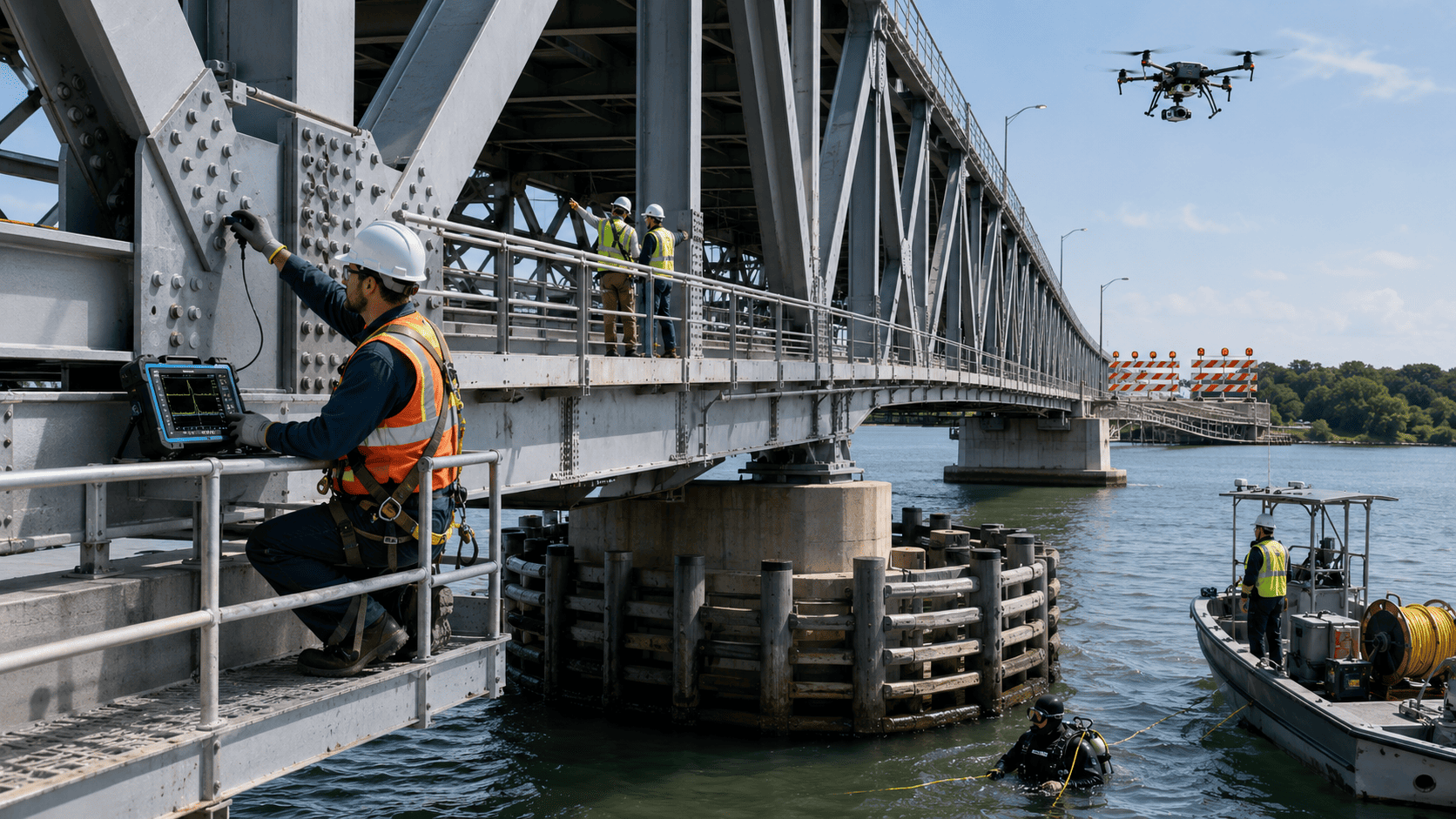
The National Bridge Inspection Standards establish nationwide requirements for inspecting and evaluating highway bridges on public roads. Routine visual inspections remain essential, but underwater foundations, fatigue-prone details, nonredundant members, complex bridges, and components with known deterioration may require specialized methods or shorter inspection intervals.
A load rating estimates how much weight an existing bridge can safely carry in its present condition. It must reflect deterioration, repairs, added pavement, changes in traffic, and the current behavior of critical members. When capacity is insufficient, owners may need to post weight limits, restrict traffic, repair the bridge, or close it.
Nondestructive testing complements visual inspection by detecting defects without damaging the component. Depending on the material and suspected problem, inspectors may use ultrasonic, magnetic-particle, radiographic, acoustic, or other methods to identify cracks, weld defects, corrosion, and hidden section loss.
Government Oversight, Training, and Accountability
Bridge safety is shared among owners, state transportation departments, federal agencies, designers, contractors, inspectors, and maintenance personnel. Owners must preserve accurate records, respond to critical findings, update load ratings, enforce restrictions, and complete repairs before deterioration reaches an unsafe level. Oversight agencies establish standards, audit compliance, publish guidance, and act when investigations reveal a recurring national risk.
Training must keep pace with new materials, inspection technologies, and lessons from failures. Inspectors need enough bridge-specific knowledge to recognize critical components and understand how localized damage can affect the full load path. Designers and contractors must account for temporary conditions, rehabilitation loads, and construction changes. Clear documentation and assigned responsibility are essential when a safety concern requires escalation.
Vessel-Strike Protection and Emergency Warning Systems
Bridges over navigable waterways require site-specific evaluation of vessel size, traffic frequency, channel geometry, currents, wind, visibility, pier location, and the consequences of losing a support. Risk reduction may include dolphins, fender systems, reinforced piers, channel modifications, navigation controls, or replacement of a vulnerable structure.
Physical protection is only one layer of defense. Detection and communication systems can identify an errant vessel or sudden bridge movement, close traffic, warn motorists, and direct workers to evacuate. The Francis Scott Key Bridge collapse renewed U.S. attention to vulnerability assessments and the need to coordinate bridge owners, marine operators, emergency services, and highway agencies before an impact occurs.
The lasting lesson of bridge failures is that safety is a continuous process: design for credible hazards, verify critical calculations, inspect the components most likely to control collapse, act on deterioration, and update standards when evidence exposes a weakness. Each investigation adds to that evidence and helps prevent the same combination of errors from recurring.
Related Entries: